
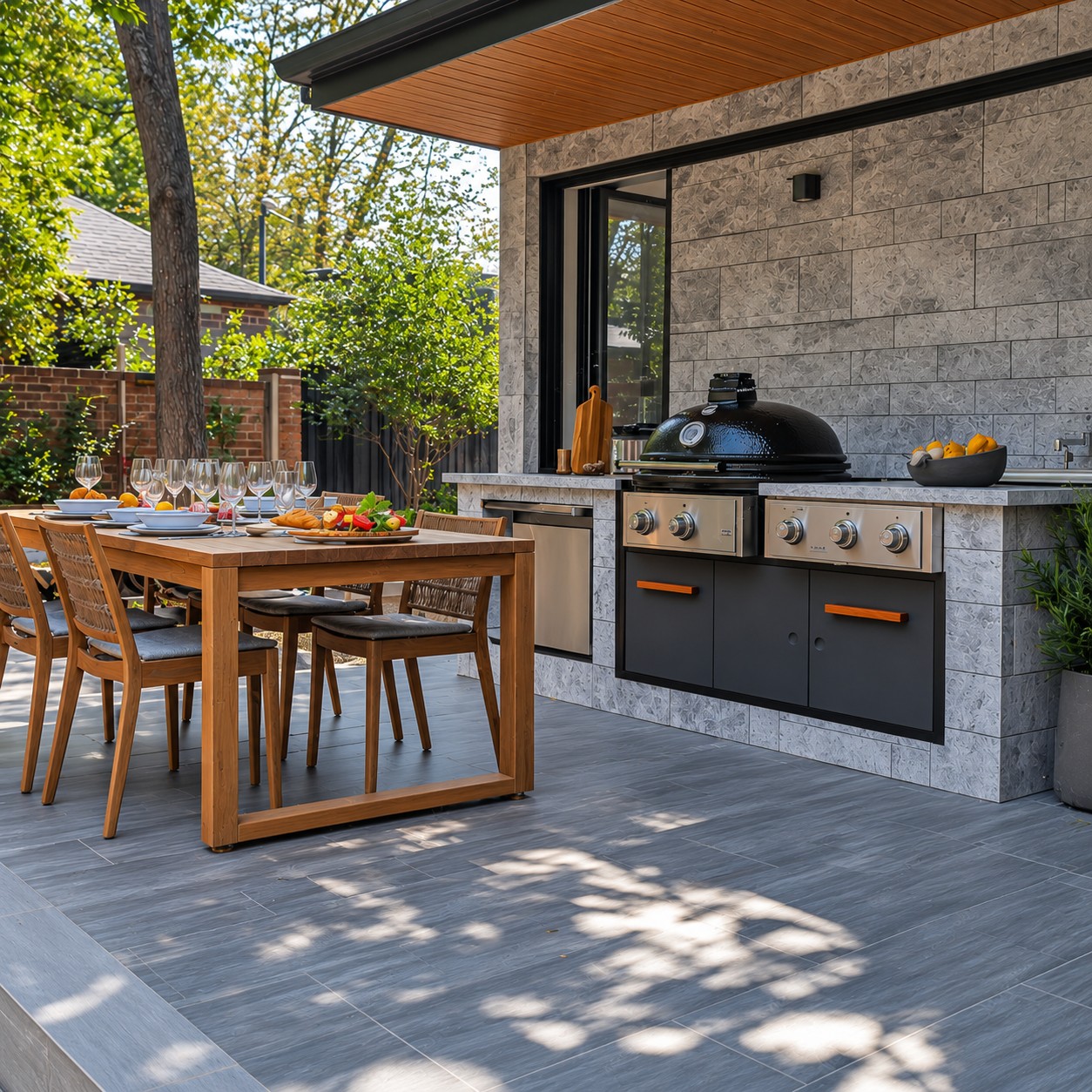
Outdoor kitchens and built-in cooking islands bring true Florida entertaining directly into your Parrish backyard. Between stainless steel grills, heavy concrete countertops, ceramic smokers, and refrigeration units, an exterior cooking space places substantial structural demands on your patio foundation. The surface underneath must withstand heavy static weight, direct radiant heat, hot grease splatters, and torrential summer rainfall without shifting or cracking.
Weight and Heat Demands of Exterior Cooking Islands
A fully equipped outdoor culinary island easily weighs several thousand pounds once you combine concrete block framing, granite worktops, appliances, and cabinetry. Standard patio pavers intended only for light foot traffic can crack or settle unevenly under that level of concentrated pressure, especially across the sandy soils common throughout Manatee County.
High compressive strength distributes this load evenly. Commercial-grade thick interlocking units spread the structural load across a broader compacted aggregate base. Beyond physical weight, the materials directly beneath your grill and smoker face severe thermal cycling. Charcoal grills and gas burners drop hot embers and radiate downward heat that cause low-density concrete to spall or discolor. Thick, heat-tolerant materials prevent costly surface damage and keep your cooking station level for decades.
Top Surface Materials for Grill Stations and Kitchens
Selecting the right material ensures your outdoor entertaining area stays functional, safe, and visually appealing across all seasons. Different options provide distinct structural and maintenance advantages for local backyards.
Engineered Concrete Units
Dense, interlocking heavy duty pavers provide the compressive strength needed to anchor custom masonry grill stations without sinking. Dense concrete units measure at least 60mm to 80mm in thickness and interlock tightly to distribute localized pressure across your entire patio deck.
Natural Stone Slabs
Dense stone materials, including granite and dense limestone, resist grease penetration while keeping surface temperatures manageable under direct sun. Selecting durable natural stone pavers gives your outdoor kitchen an earthy texture that complements natural Florida landscapes.
Outdoor Rated Porcelain Units
Hard-fired outdoor porcelain tiles and pavers carry an absorption rate below 0.5 percent, making them nearly impervious to olive oil, red wine, barbecue sauces, and acidic citrus drips. Outdoor rated porcelain tile cleans easily with standard soap and water, resisting tough barbecue stains that easily penetrate softer cast stones.
Key Features for Outdoor Kitchen Bases
When planning your layout in Parrish, prioritize materials built to handle intense Gulf Coast weather patterns and active food preparation zones. Pay close attention to these critical material factors:
Compressive load ratings: Look for pavers rated at 8,000 PSI or higher to eliminate cracking beneath stone veneer cabinetry and built-in griddles.
Low moisture absorption: Florida summer downpours saturate open patios quickly. Dense surfaces prevent water from pooling beneath hot appliances.
Slip resistance: Grease spatters and summer pool splashes make outdoor surfaces slippery. Choose textured finishes that provide reliable traction for bare feet and chef shoes alike.
UV colorfastness: High sun exposure bleaches out cheap surface dyes. Through-body colored pavers retain their original shades through decades of intense afternoon sun.
Protective sealing compatibility: Ensure the material easily accepts penetrating sealers to block cooking grease, barbecue sauce, and hot oil stains.
Base Construction in Parrish Soil
Parrish continues to grow rapidly with expansive new neighborhoods, but local sandy soil tends to shift quickly during rainy afternoons. A flawless surface installation always starts below ground level.
Subgrade Excavation and Drainage Slope
Excavation for a heavy kitchen foundation must go deeper than standard walkway installations. Install geotextile fabric directly over the native subgrade to stop sand from working its way up into your crushed rock base. Next, compact a six to eight inch base of crushed aggregate in multiple layers to establish an unyielding support platform.
Proper pitching prevents standing moisture. Your base must maintain a slight outward slope, typically one-quarter inch per foot, moving water away from appliances, electrical conduits, and your home foundation. Pairing sturdy bases with beautiful hardscaping completes your expansive lanai patio environment, blending your interior open-concept floor plan directly into your backyard dining venue.
Build Your Outdoor Living Space Today
Ready to design an exterior kitchen that handles every barbecue weekend with ease? Visit our nearby showroom in Bradenton to touch samples, inspect textures, and discuss your backyard build with local hardscape specialists.
Visit our Bradenton, Sarasota, or Venice showroom to inspect durable paver collections, natural stone slabs, and exterior porcelain styles in person.
Schedule an in-home measurement with our installation experts to calculate base specifications for your cooking island.
Contact our team online to secure project estimates and plan your outdoor entertainment installation.
About Us
Founded in 1973, Manasota Flooring has served homeowners across the Florida Gulf Coast for more than 50 years. With full-service showrooms across Sarasota, Bradenton, and Venice, we bring generations of hands-on expertise to every home project. From interior luxury vinyl, tile, and hardwood to outdoor patio pavers and custom hardscapes, we supply high-performance materials designed specifically for Florida humidity, heat, and active coastal living.


