

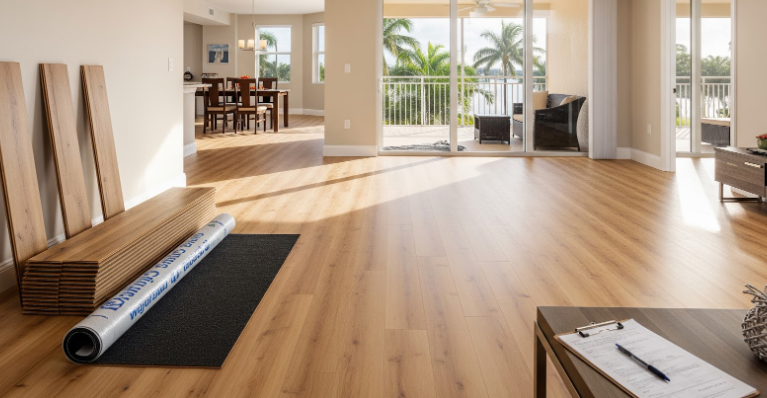
Why Condo Flooring Choices Matter More Than You Think
Living in a condo in Bradenton offers plenty of perks — beautiful coastal surroundings, low-maintenance living, and shared amenities that make everyday life easier. But when it comes to flooring updates, condo owners quickly discover that their choices involve more than just style. Unlike single-family homes, condos often come with HOA guidelines that influence what materials can be installed and how they must perform.
One of the most common areas of concern is sound. Noise travels differently in multi-story buildings, and flooring plays a major role in how footsteps, moving furniture, and daily activity are heard by neighbors below. That’s why many homeowners considering laminate flooring want to understand exactly how it fits within HOA requirements before starting a renovation.
At Manasota Flooring, condo owners often ask the same questions: Is laminate allowed? What noise ratings matter? How can you choose a floor that looks beautiful while meeting building expectations? The good news is that modern laminate flooring offers stylish, durable options that can work very well in condo environments — as long as you plan carefully.
This guide walks through what Bradenton condo owners need to know about HOA rules, sound ratings, installation considerations, and how to choose laminate flooring that supports both comfort and compliance.
Understanding HOA Flooring Rules in Bradenton Condos
Homeowners associations exist to maintain comfort and consistency across shared buildings, which means flooring changes often require approval before installation begins. While every community has its own guidelines, many Bradenton condos share similar concerns when it comes to flooring.
Common HOA requirements may include:
Specific sound insulation standards
Approved flooring types
Underlayment requirements
Installation methods
Pre-approval processes
These rules aren’t designed to limit design choices — they’re meant to reduce noise transfer and preserve quality of life for everyone in the building. For example, a floor that sounds perfectly fine in a single-family home might create excessive impact noise in a condo setting.
Before selecting materials, it’s smart to review HOA documents carefully and confirm any sound rating requirements. Some associations ask for documentation showing the flooring system meets minimum acoustic standards. Others may request installation details before granting approval.
Taking time to understand these expectations early helps avoid delays and ensures the project moves forward smoothly. It also allows homeowners to choose flooring solutions that combine style with practical performance.
Why Noise Ratings Are So Important in Condo Living
Noise is one of the biggest concerns in multi-level buildings. Even everyday sounds — footsteps, chairs sliding, or dropped items — can travel through floors and create frustration between neighbors. That’s why flooring noise ratings matter so much when updating a condo.
There are two main ratings homeowners should understand:
IIC (Impact Insulation Class)
This rating measures how well a floor reduces impact sounds, like walking or moving furniture. Higher IIC numbers generally indicate better sound absorption.
STC (Sound Transmission Class)
STC measures airborne sound reduction, such as voices or music traveling between units. While flooring isn’t the only factor affecting STC, it still plays a role in overall performance.
Many condo associations specify minimum IIC or STC ratings. Meeting these standards helps ensure flooring upgrades don’t negatively affect neighboring units. Laminate flooring can absolutely meet these requirements — especially when paired with the right underlayment.
The key is understanding that the flooring system matters as a whole. The laminate itself, the padding underneath, and professional installation all work together to reduce sound transmission and create a quieter living environment.
How Laminate Flooring Performs in Condo Environments
Modern laminate flooring has come a long way from earlier generations. Today’s products are designed to offer both style and performance, making them a strong option for condo owners who want the look of hardwood with added practicality.
Benefits that make laminate appealing for condos include:
Attractive wood-look designs
Durable wear layers
Easy maintenance
Resistance to everyday scratches and scuffs
Comfortable feel compared to harder surfaces
Many homeowners also appreciate how laminate creates a warm, cohesive look throughout open living spaces. In coastal condos, lighter wood tones often complement natural light and create an airy atmosphere that fits the local lifestyle.
When exploring options for laminate flooring, it’s important to choose products designed with acoustic performance in mind. Some laminate collections include built-in padding or are specifically engineered to work well with sound-reducing underlayments, making them ideal for shared buildings.
The right combination of product and installation approach allows condo owners to enjoy stylish flooring while respecting building requirements.
The Role of Underlayment in Meeting HOA Requirements
If there’s one element that makes the biggest difference in condo flooring performance, it’s underlayment. This layer sits between the subfloor and the laminate, helping absorb sound and create a more comfortable walking surface.
High-quality underlayment can help:
Reduce impact noise
Improve overall acoustic ratings
Add cushioning underfoot
Smooth minor subfloor imperfections
Enhance long-term flooring performance
Some HOAs specifically require certain types or thicknesses of underlayment. Others may ask for testing documentation showing the flooring system meets required standards. That’s why it’s essential to choose products that work together rather than selecting flooring and padding separately without guidance.
Professional installers understand how to match underlayment with laminate flooring to achieve the best acoustic results. This ensures the final installation feels solid, performs well, and aligns with condo guidelines.
Installation Considerations for Condo Owners
Installation in a condo environment requires a little more planning compared to single-family homes. Access, noise restrictions, and HOA rules can all influence how the project unfolds.
Important factors to keep in mind include:
Building hours for renovation work
Elevator access and material delivery
Approval timelines
Flooring transition requirements between rooms
Proper expansion gaps for floating floors
Most laminate flooring is installed as a floating floor, meaning it isn’t glued or nailed down. This method helps reduce sound transfer and allows the floor to expand and contract naturally with Florida’s humidity changes.
Working with experienced professionals helps ensure the installation process runs smoothly and meets building expectations. Proper planning reduces surprises and keeps the project efficient from start to finish.
Style Tips for Laminate Flooring in Coastal Condos
Beyond performance and compliance, style still matters. Flooring sets the tone for the entire home, and choosing the right look can make a condo feel more spacious, bright, and inviting.
Popular style directions in Bradenton condos include:
Light oak or driftwood tones
Soft gray finishes
Subtle grain patterns
Wide plank visuals
These options reflect natural coastal aesthetics while helping smaller spaces feel more open. Consistent flooring across living areas can also make condos appear larger and more connected.
When choosing finishes, many homeowners lean toward designs that balance trend-forward style with timeless appeal. Flooring is a long-term investment, so selecting something that remains attractive for years helps protect both enjoyment and resale value.
Common Mistakes Condo Owners Can Avoid
Flooring updates often go smoothly when homeowners understand potential pitfalls ahead of time. A few common mistakes can create unnecessary delays or complications.
Things to avoid include:
Skipping HOA approval steps
Choosing flooring without checking sound ratings
Using incorrect underlayment
Prioritizing style over performance
Attempting DIY installation without experience
The good news is that these issues are easy to prevent with proper planning and professional guidance. Taking a thoughtful approach helps ensure the finished floor looks beautiful and performs exactly as intended.
Creating a Quiet, Stylish Condo You’ll Love Coming Home To
Updating condo flooring is about more than appearance — it’s about creating a space that feels comfortable, peaceful, and aligned with the way you live. Laminate flooring offers Bradenton condo owners a smart balance of style, durability, and acoustic performance when chosen and installed correctly.
By understanding HOA requirements, paying attention to noise ratings, and selecting the right underlayment, homeowners can enjoy a beautiful upgrade that supports both personal comfort and community harmony.
If you’re ready to explore flooring options or want help navigating condo requirements, we’re here to help — simply we are here to help you plan the right flooring solution for your space.


