
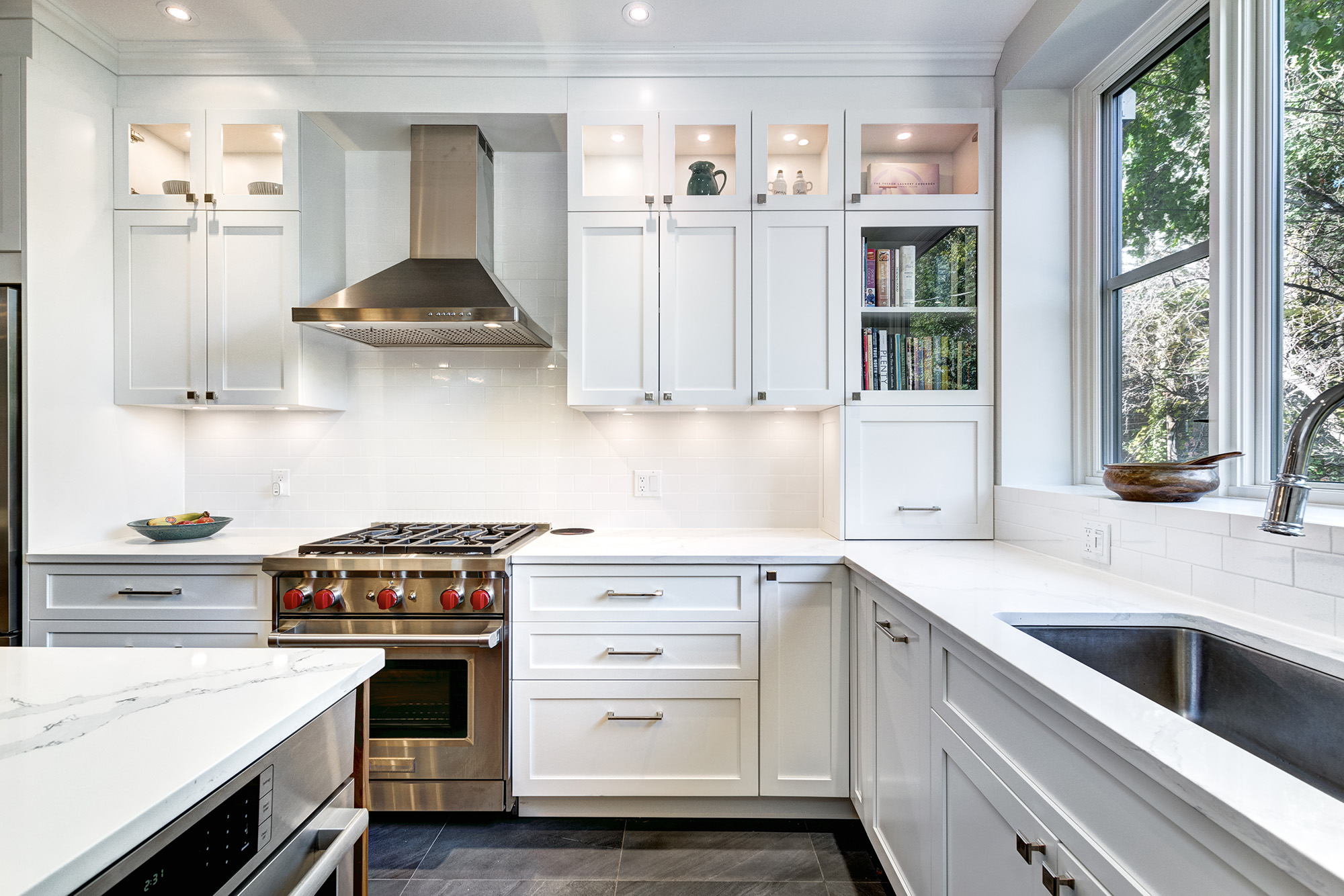
When you decide to remodel a kitchen or bathroom in Southwest Florida, it is easy to get caught up in the excitement of choosing paint colors, hardware styles, and layout options. But beneath the surface of a beautiful design lies a major structural challenge: our local climate. Between the intense summer heat, salt air, and humidity levels that routinely cross 70%, the materials you put in your home have to work incredibly hard just to last.
Your cabinetry is especially vulnerable to these conditions, as constant moisture can quickly cause inferior finishes to peel, warp, or crack along the joints. Ensuring your kitchen or bath investment holds up over the long haul comes down to understanding exactly how specific finishes and underlying substrates react to our daily moisture.
Understanding the Substrate: MDF vs. Solid Wood
Before evaluating surface finishes, you must look at what is underneath. Solid wood is a living material that naturally expands and contracts as humidity shifts. In coastal communities like Siesta Key or Longboat Key, this constant shifting creates a specific structural problem: it breaks the paint lines at the joints of traditional five-piece Shaker doors, leading to hairline cracks.
Because of this, Medium-Density Fiberboard (MDF) or engineered wood composites are often the smartest choice for a painted kitchen or bath. MDF is isotropic, meaning it expands and contracts uniformly in all directions rather than twisting or splitting along a grain line. It stays completely stable under high humidity, providing a smooth, reliable foundation for protective coatings.
The Best Cabinet Finishes for Moisture Resistance
1. Factory-Applied Conversion Varnishes
If you want the natural warmth of a stained wood kitchen, factory-applied conversion varnish is the absolute gold standard for moisture defense. This is a two-part coating where a chemical resin and an acid catalyst cross-link during the curing process.
Why it works: This chemical reaction creates a dense, completely impermeable shell over the wood grain. It blocks moisture from creeping into the wood fibers and protects the finish from yellowing under intense Florida sunlight.
What to look for: Always specify a factory-cured finish. Applying coatings on an active, dusty job site cannot replicate the controlled temperature, humidity, and cleanliness of a factory environment, which is required for the varnish to bond permanently.
2. Thermofoil and Laminate Surfaces
Modern thermofoil is a vinyl layer fused to an MDF core using intense heat and vacuum pressure, while High-Pressure Laminate (HPL) uses resin-impregnated papers bonded under extreme pressure.
Why it works: Because these are non-porous synthetic surfaces, they cannot absorb water or salt air. They are incredibly resilient against everyday coastal life—fine sand tracked in from Coquina Beach easily wipes off without scratching or dulling the surface.
The structural limitation: Thermofoil is sensitive to extreme heat. If installed directly next to a self-cleaning oven or a high-heat dishwasher without a protective heat shield, the edge adhesive can soften and cause the vinyl to peel.
3. Factory-Applied Polyurethane and Acrylic Paints
For homeowners who want a classic, crisp white or coastal blue painted kitchen, standard latex or oil-based house paints will not suffice. Instead, look for factory-applied polyurethane or acrylic coatings.
Why it works: These specialty finishes cure into a dense, flexible, plastic-like film. This slight flexibility allows the cabinet to handle minor structural shifts without cracking or peeling.
The specification: Look for cabinetry lines that explicitly meet Kitchen Cabinet Manufacturers Association (KCMA) standards. This certification guarantees the finish has survived rigorous testing, including 48 hours of 120°F heat at 70% humidity without blistering or discoloration.
Areas to Monitor: Hardware and Joinery
Moisture damage rarely starts on a wide, flat panel; it begins where the protective finish is broken. Every screw hole drilled for a hinge, drawer slide, or handle exposes the raw interior wood to the air.
During our installation process, our crews ensure these connections are clean, precise, and sealed. For homes directly exposed to the saltwater breeze, we recommend upgrading to solid brass, marine-grade stainless steel, or zinc-alloy hardware to prevent the pitting and rust common with cheaper iron-based metals.
Installation Realities in Southwest Florida
A successful cabinet project depends just as much on the installation process as it does on the manufacturing. Whether we are delivering cabinetry to a new build in Lakewood Ranch or a mid-century renovation in The Meadows, our project coordinators manage the timeline tightly around your home's HVAC status.
Cabinets should never sit in an unconditioned, humid house. We do not deliver your cabinetry until your air conditioning system has been running continuously for at least 48 to 72 hours. This crucial step allows the framing, drywall, and subfloors to acclimate to standard living conditions (ideally between 35% and 55% relative humidity). Installing cabinetry in a damp environment traps moisture behind the boxes, which can cause structural warping or mold growth down the road once the AC is turned on.
Finalizing Your Coastal Cabinet Strategy
Investing in your home is a major decision, and you shouldn't have to guess whether your materials are suited for the local environment. Balancing the right substrate with a certified factory finish ensures your kitchen or bathroom remodel stays beautiful and functional for decades.
To see these specialized, moisture-resistant cabinet lines in person and look through our full selection of styles, visit one of our showrooms in Sarasota, Bradenton, or Venice. If you are ready to map out your layout or have questions about how the installation process works, contact us today to speak directly with an expert project coordinator.


