

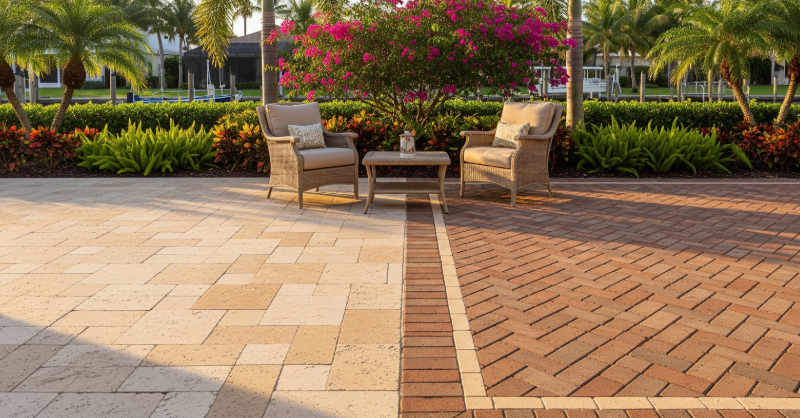
Choosing the Right Paver for Coastal Living in Venice, FL
Designing an outdoor living space in Venice means balancing beauty, function, and Florida durability. Whether you’re planning a new lanai or updating your patio, paver choice matters. Two favourites among homeowners are travertine and brick pavers—each offering its own advantages in style, maintenance, and performance under coastal conditions.
Venice’s humid air, salty breezes, and bright sunshine create unique challenges. The right paver can handle all that while elevating your outdoor design. To help you make an informed decision, this guide compares travertine and brick pavers across key factors: appearance, heat resistance, durability, maintenance, and cost.
At Manasota Flooring, we’ve been helping homeowners across Sarasota, Bradenton, and Venice build outdoor spaces that reflect the Gulf Coast lifestyle for over 50 years.
Understanding Travertine Pavers
Travertine, a type of natural limestone, has been used in architecture for centuries. It’s beloved for its luxurious texture and organic variation, giving outdoor spaces a timeless, Mediterranean-inspired aesthetic that fits perfectly in coastal Florida.
Key Features
Natural Beauty: No two pieces are identical—each paver has unique veining and colour tones.
Cool Underfoot: Reflects heat, ideal for barefoot lounging.
High-End Appeal: Adds instant sophistication to any lanai or pool deck.
Available in shades like ivory, walnut, and silver, travertine creates a bright, sun-washed look that complements white stucco homes and tropical landscaping. It’s an elegant choice that blends seamlessly with Venice’s relaxed luxury.
Understanding Brick Pavers
Brick pavers are made from clay, kiln-fired to achieve rich, earthy tones and a distinctive coastal-cottage feel. They’ve long been a Venice favourite for driveways, patios, and pool surrounds thanks to their durability and old-world charm.
Key Features
Classic Warmth: Terracotta and russet hues pair beautifully with Florida’s lush greenery.
Textured Grip: Naturally slip-resistant, perfect for pool decks and walkways.
Strong and Long-Lasting: Handles heavy traffic and weather extremes.
Brick pavers work well for homeowners who want a more traditional or rustic coastal aesthetic. Their vibrant tone creates visual warmth, especially against modern home exteriors and light façades.
Comparing Travertine vs. Brick Pavers for Venice Lanais
1. Aesthetic Appeal
Travertine: Offers high-end luxury, subtle veining, and a light-reflective finish ideal for modern coastal spaces.
Brick: Creates a warmer, rustic look with deep red and brown tones that enhance classic architecture.
If your lanai design leans toward sleek and bright, travertine is the winner. For a timeless, earthy charm, brick remains unmatched.
2. Durability and Weather Resistance
Travertine: Withstands heat and moisture; however, it can be porous without sealing.
Brick: Extremely strong but may fade slightly over years of direct sun exposure.
Both handle Florida weather well, though travertine performs slightly better against salt exposure when sealed properly.
3. Heat Retention
Travertine stays naturally cool underfoot—even on Venice’s hottest afternoons—making it a top choice for pool areas. Brick, on the other hand, can retain more heat and feel warmer to the touch.
4. Maintenance Needs
Travertine: Requires periodic sealing to prevent staining and erosion.
Brick: Low-maintenance but benefits from occasional cleaning and resealing for colour preservation.
Both are easy to clean, though travertine demands a bit more care to maintain its natural finish.
Cost and Value Considerations
While travertine tends to cost more upfront than brick, many Venice homeowners see it as an investment in long-term luxury and property value. Brick pavers, however, are a budget-friendly option with incredible longevity and easy replacement if needed.
Cost Overview
Travertine: Higher material cost; adds resale appeal and visual impact.
Brick: Lower initial cost; minimal maintenance over time.
Ultimately, the choice depends on your priorities—travertine for elegance and comfort, or brick for timeless warmth and economy.
Maintenance Tips for Coastal Paver Longevity
Regardless of your paver type, Florida’s coastal climate requires a few care habits to keep your lanai looking pristine:
Seal regularly: Every 2–3 years protects against salt and rain damage.
Sweep frequently: Prevents sand accumulation and staining.
Pressure wash seasonally: Keeps colours fresh and surfaces safe.
Inspect joints: Refill sand or polymeric material to prevent shifting.
With consistent upkeep, both brick and travertine can last decades while maintaining their beauty. For professional sealing and cleaning, explore our pavers in Florida solutions tailored for Gulf Coast conditions.
Which Paver Fits Your Lifestyle?
Choose Travertine If:
You prefer a light, natural look.
You want cooler surfaces underfoot.
You’re aiming for high-end design appeal.
Choose Brick If:
You value classic charm and warm tones.
You need a cost-effective, low-maintenance option.
You want long-lasting durability for family spaces.
Both options can enhance your outdoor living area beautifully—it simply depends on your design vision and lifestyle.
Work with Local Experts for a Seamless Outdoor Upgrade
Whether your heart leans toward natural travertine or the timeless texture of brick, our team at Manasota Flooring will help you find the perfect match for your Venice home. From design consultation to professional installation, we ensure a flawless result built to thrive in coastal conditions.
For advice or a free estimate, reach out to us. Let’s make your lanai the showpiece of your outdoor living space.


